I still remember the first time I walked into a server room that looked perfectly designed on paper—but failed miserably in reality. Cables were neatly labeled, racks were aligned, and the network diagram was a work of art. Yet, the system kept dropping IP cameras, access points rebooted randomly, and troubleshooting felt like chasing ghosts.
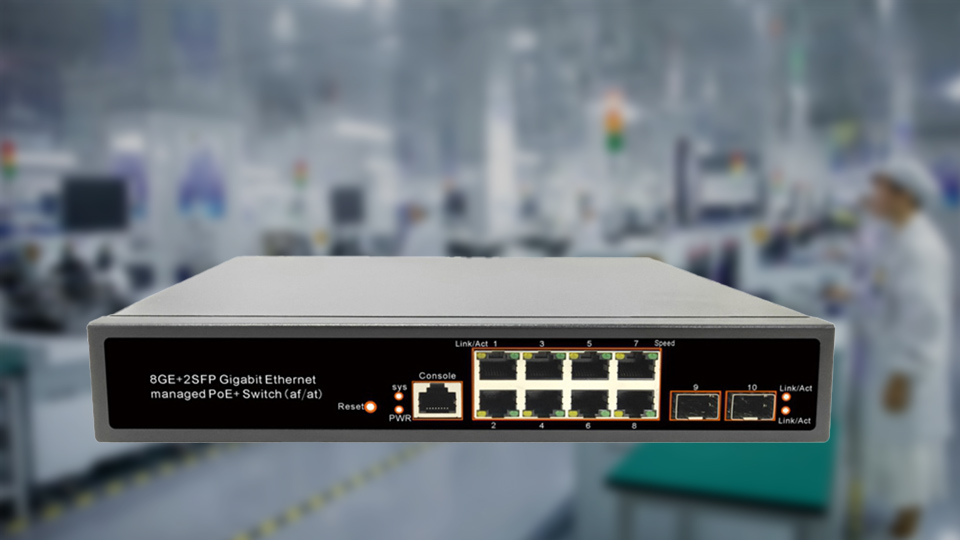
At the center of it all? A batch of unstable PoE switches that simply couldn’t handle real-world demands.
That experience changed the way I evaluate network equipment forever.
Why Stability Matters More Than Specs
When I talk to system integrators and field engineers, one thing comes up again and again: “We don’t need fancy—we need reliable.”
On paper, many PoE switches look identical:
Same port count
Similar power budgets
Comparable throughput
But once deployed, the differences become painfully obvious.
A stable white-category PoE switch isn’t just about delivering power and data. It’s about consistency under pressure:
Continuous operation in high-temperature environments
Stable power delivery to sensitive devices like IP cameras and VoIP phones
Resistance to voltage fluctuations and network surges
I’ve seen projects delayed for weeks not because of complex architecture—but because of intermittent switch failures that were nearly impossible to diagnose.
What Engineers Actually Care About (But Rarely Say Out Loud)
Over time, I’ve realized that engineers evaluate switches very differently from how they’re marketed.
We don’t just ask:
How many ports?
What’s the power budget?
We ask:
Will this still work after 6 months of 24/7 operation?
How does it behave when fully loaded?
Can it recover gracefully from power interruptions?
In one project involving a mid-sized surveillance system, we tested multiple white-category PoE switches side by side. Some performed perfectly in the first week. But under continuous load, subtle issues began to surface:
Packet loss under peak traffic
Overheating in enclosed cabinets
Inconsistent PoE output across ports
Only a few passed the “real deployment test.”
That’s when I began to appreciate the engineering discipline behind truly reliable hardware.
The Hidden Engineering Behind Reliable PoE Switches
From the outside, a switch is just a metal box with ports. But inside, the difference between “works” and “works flawlessly” comes down to design philosophy.
Here’s what I’ve learned to look for:
1. Power Supply Stability
A high-quality PoE switch must deliver consistent power across all ports—even when fully loaded. Weak power modules are often the root cause of random device reboots.
2. Thermal Design
Heat is the silent killer. Good switches manage airflow intelligently, ensuring stable operation even in poorly ventilated environments.
3. Surge and Protection Mechanisms
In real-world deployments, especially outdoors or in industrial settings, electrical interference is unavoidable. Robust protection circuits make a huge difference.
4. Chipset Optimization
Not all switching chips are created equal. Efficient packet processing under high traffic is critical for maintaining network performance.
Why White-Category PoE Switches Are Gaining Trust
There’s a growing shift among integrators toward white-category PoE switches—and it’s not just about cost.
It’s about control and practicality.
These switches often strip away unnecessary complexity and focus on what truly matters:
Stability
Compatibility
Simplicity in deployment
In my experience, when sourced carefully, they can deliver performance that rivals branded alternatives—without the overhead.
I’ve worked with teams who quietly standardized on these solutions after repeated success in the field. Not because they were cheaper, but because they worked—consistently.
A Quiet Observation from the Factory Floor
A while ago, I had the chance to observe production processes at a facility known as Newbridge Communication Equipment CO.,LTD. What struck me wasn’t flashy automation or marketing slogans—but the discipline in testing.
Burn-in tests. Load simulations. Repeated validation cycles.
It reminded me of something I’ve learned the hard way:
Reliability isn’t claimed—it’s built, tested, and proven over time.
Lessons I Wish I Knew Earlier
If I could go back and give my younger self advice when selecting PoE switches, I’d say:
Don’t trust specs alone—ask about real deployment performance
Always test under full load before large-scale rollout
Pay attention to thermal behavior, not just power ratings
Choose consistency over features you may never use
Because in the end, the true cost of a switch isn’t its price—it’s the time and trust lost when it fails.
Final Thoughts
Today, when I design or review network systems, I no longer chase the most advanced features. I look for something much simpler—and much harder to achieve:
Stability you don’t have to think about.
The kind that lets engineers sleep at night.
The kind that keeps systems running quietly in the background, doing exactly what they’re supposed to do.
And in my experience, that’s exactly why stable and reliable white-category PoE switches have become the preferred choice for those who build and maintain real-world networks.