Today, with the rapid development of the Internet of Things, IP surveillance, and smart buildings, POE switches have become core components of network infrastructure, leveraging their core advantage of "transmitting both data and power through a single network cable". Unlike ordinary switches, professional POE switches require a balance between power supply stability, network transmission efficiency, and security protection. Their production process is a rigorous adherence to precision and standards. Today, we step into the production workshop to reveal the complete process of professional POE switches from design and development to finished product delivery, guiding you to understand the craftsmanship and quality control codes behind every qualified device.
Pre-research and development and scheme design - laying a solid foundation for the core of the product
The quality of a professional POE switch is determined from its design at the source. The first step in production is not simply feeding materials into the production line, but rather research and development based on market demand and industry standards. This is also a crucial step in determining the performance, compatibility, and stability of the equipment.
The R&D team first clarifies the product positioning and, in conjunction with international standards such as IEEE 802.3af/at/bt, determines core parameters such as the number of ports, power supply, transmission rate, and protection level of the switch. Whether it is the basic model supporting 15.4W (af standard), the enhanced model supporting 30W (at standard), or the high-power model supporting 90W (bt standard), each parameter needs to be repeatedly calculated to ensure compatibility with the power supply requirements and power matching of different terminal devices such as IP cameras, wireless APs, and IP phones.
In the scheme design phase, the focus is on completing the dual research and development of hardware circuits and software firmware. In terms of hardware, we optimize the selection of PSE controller chips, design power management modules and heat dissipation structures, and integrate multiple protection circuits such as overcurrent, short circuit, and overheating protection to prevent terminal equipment damage due to abnormal power supply. In terms of software, we develop firmware programs that are compatible with various network environments, optimize power distribution algorithms and data transmission protocols to ensure precise power distribution and stable network transmission, and reserve firmware upgrade interfaces to ensure product scalability.
After the design scheme is completed, it must undergo multiple rounds of simulation testing and prototype debugging to correct issues such as unreasonable circuit layout, uneven power distribution, and poor heat dissipation. Only when all performance indicators meet preset standards and industry norms will it enter the formal production stage. In this step, we adhere to the principle of "design as quality control" to avoid production hazards from the source.
Material procurement and incoming inspection - maintaining the first line of defense for quality
The stability of a POE switch is inseparable from the quality of every component. After finalizing the research and development plan, we proceed to the material procurement phase, adhering to the principle of "selecting high-quality materials and conducting rigorous factory inspections". All core components are sourced from renowned suppliers in the industry, including PSE controllers, power chips, capacitors, resistors, PCB circuit boards, RJ45 ports, and aluminum heat sinks.
Before materials are stored, they undergo comprehensive incoming inspection, which serves as the first key line of defense to ensure quality and prevent any unqualified materials from entering the production process. The inspection team uses professional instruments to conduct sampling and full inspection on each batch of components: testing the parameter accuracy of capacitors and resistors to ensure compliance with circuit design requirements; testing the conductivity of PCB circuit boards to identify potential short circuits and soldering defects; verifying the power control accuracy and protection mechanism of PSE chips to ensure power supply safety; and inspecting the compressive strength and high temperature resistance of shell materials to ensure long-term stable operation of the equipment.
All inspections are recorded, and a comprehensive material traceability system is established. Unqualified materials are uniformly rejected and returned, ensuring that every component put into production meets the quality requirements of professional POE switches.
SMT chip mounting and DIP plug-in - precise assembly of core hardware
After the materials are qualified, the production and assembly process officially begins. The core steps are divided into two major categories: SMT (Surface Mount Technology) and DIP (Dual In-Line Package). The entire process is operated using automated equipment, balancing efficiency and precision while reducing manual operation errors.
SMT (Surface Mount Technology) is the process of precisely mounting small components onto the surface of a PCB (Printed Circuit Board). The workshop utilizes high-precision fully automated placement machines to accurately mount small components such as capacitors, resistors, and chips onto the designated locations of the PCB according to the preset circuit layout, achieving a placement accuracy of up to 0.01 millimeters. After the placement is completed, the PCB will enter a reflow soldering oven, where the temperature curve inside the oven (four stages: preheating, heating, soldering, and cooling) is precisely controlled to melt and solidify the solder paste, allowing the components to firmly bond with the PCB, ensuring soldering strength and conductivity, and avoiding issues such as cold solder joint and false soldering - this is also one of the core processes that guarantee stable power transmission and data transmission in POE (Power over Ethernet) switches.
After reflow soldering is completed, the DIP plug-in process begins. For components with large volumes that cannot be SMT-mounted (such as power connectors, RJ45 ports, heat sinks, etc.), manual assistance is provided to accurately insert them into the corresponding holes on the PCB board using a plug-in machine. They are then sent to a wave soldering furnace for soldering to ensure a tight connection between the plug-in components and the PCB board. During the plug-in and soldering process, dedicated personnel conduct inspections throughout to promptly identify issues such as misalignment of plug-ins and poor soldering, ensuring that each component is installed in place and soldered properly.
Semi-finished product testing and aging test - troubleshooting potential hazards
After the hardware assembly is completed, it does not directly proceed to the finished product assembly. Instead, it first undergoes semi-finished product testing and aging tests. This is a crucial step in identifying potential faults and ensuring long-term product stability. It also represents one of the core differences between the production of professional POE switches and ordinary switches.
The semi-finished product testing primarily focuses on comprehensive inspection of the electrical performance and functionality of PCB circuit boards. Utilizing professional testing instruments, it assesses the power supply voltage and output power of each POE port to ensure compliance with the corresponding IEEE standards, with voltage fluctuations not exceeding ±5% and power output reaching over 90% of the nominal value. The testing also involves evaluating the transmission rate, compatibility, and anti-interference capability of network ports to guarantee smooth data transmission without packet loss. Additionally, it verifies the effectiveness of overcurrent, short circuit, and overheat protection mechanisms by simulating abnormal scenarios to test whether the device can quickly trigger protection and avoid damage to itself and terminal devices. Simultaneously, the operational stability of firmware programs is examined to ensure normal functions such as power distribution and network management.
After passing the semi-finished product testing, all equipment will enter the aging room for rigorous aging tests. We simulate different working environments (normal temperature, high temperature, low temperature) and allow the equipment to operate continuously at full capacity for 24-72 hours, while monitoring the equipment's working status, temperature changes, power stability, and network transmission performance throughout the process. The purpose of the aging test is to expose potential faults in the equipment (such as component aging, poor circuit contact, etc.) before it leaves the factory, allowing for timely troubleshooting and repair. This ensures that the equipment can maintain stability during long-term full-load operation after leaving the factory and avoid malfunctions during later use. Only semi-finished products that pass the aging test can proceed to the next step of finished product assembly.
Assembly and appearance inspection of finished products - balancing practicality and appearance value
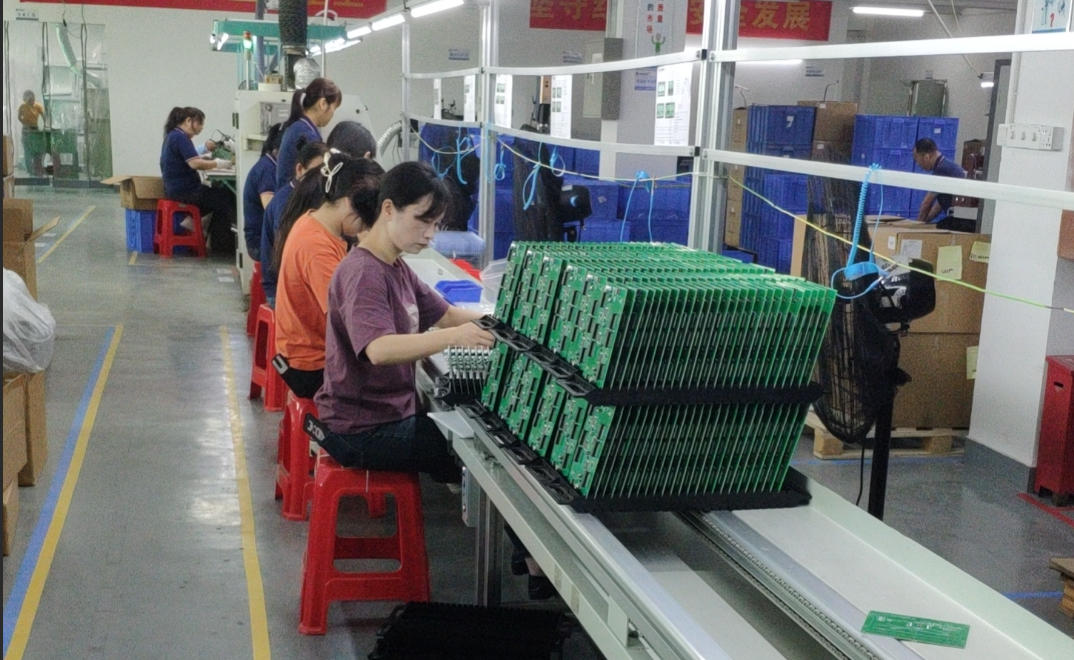
After passing the aging test, the product enters the finished product assembly process, which mainly involves shell assembly, interface installation, label pasting, and other procedures. Before assembly, the aged semi-finished products are cleaned to remove surface dust and stains. Subsequently, the PCB circuit board is precisely installed into the customized shell, and the screws are tightened (the torque of the screws is strictly controlled to avoid damage to the circuit board due to overtightening and poor contact due to loosening). Components such as power adapters and indicator lights are installed to ensure that all interfaces are aligned and securely installed, facilitating user wiring and use in the later stage.
After the assembly of the finished product is completed, a comprehensive appearance inspection is conducted: checking whether the casing has scratches, damage, or deformation, and whether the interfaces are smooth and not loose; checking whether the indicator lights and labels are clear and standardized, with the label clearly indicating product model, parameters, production date, serial number, and other information for later traceability; checking whether the equipment's cooling vents are unobstructed, ensuring that the cooling effect meets design requirements and avoiding performance issues due to overheating during equipment operation. Products that fail the appearance inspection will undergo rework and repair until they meet the appearance standards.
Full inspection of finished products and factory audit - ensuring every unit is qualified for shipment
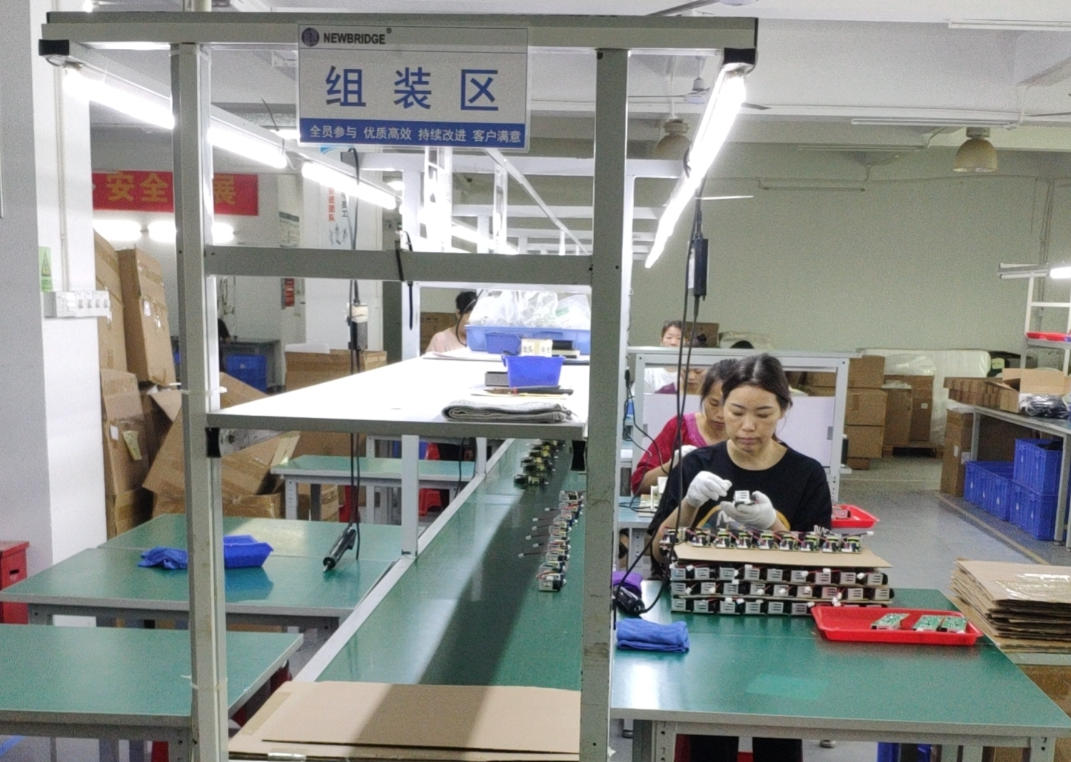
After the assembly of finished products is completed, the final full inspection process is initiated, which serves as the last quality control line before the products leave the factory. The "full inspection + sampling re-inspection" mode is adopted to ensure that every POE switch leaving the factory meets the quality standards.
The full inspection of finished products covers multiple dimensions such as electrical performance, functionality, appearance, and safety, complementing the testing of semi-finished products: retesting the power supply stability of POE ports and network transmission rates to ensure no abnormalities; testing the overall power consumption of the equipment, optimizing energy-saving performance, and ensuring that the overall system conversion efficiency is higher than 80%; verifying the insulation performance and lightning protection capability of the equipment, complying with safety specifications such as IEC 60950-1, and avoiding potential safety hazards such as electric shock and lightning strikes; rechecking the appearance and interfaces to ensure no defects; at the same time, randomly selecting a certain proportion of finished products for repeated testing and aging tests to verify the consistency of product quality.
After all inspections are passed, the product enters the factory inspection phase. The inspection team verifies the inspection reports, production records, and material traceability information of each device to ensure that all data are complete and compliant. Subsequently, the qualified products undergo cleaning and packaging, and are equipped with manuals, power adapters, screws, and other accessories. They are then labeled with qualified identification and ready for shipment.
Packaging, delivery, and after-sales traceability - providing escort throughout the entire process
In the packaging process, shockproof and moisture-proof packaging materials are used to ensure that the equipment will not be damaged due to collision or moisture during transportation. The packaging clearly marks product information and transportation precautions for logistics and user identification.
When products are being dispatched from the warehouse, the warehouse team verifies the product model and quantity, and liaises with the logistics department to ensure precise delivery to the users. Simultaneously, a comprehensive after-sales traceability system is established, where each device is assigned a unique serial number that can trace back to information such as production batch, material source, and inspection records. This enables quick identification and efficient resolution of any after-sales issues that users may encounter in the future.
From R&D design to finished product delivery, a professional POE switch goes through seven core stages and hundreds of testing procedures, adhering to the quality control principle of "every process has standards, every product is tested, and every record is traceable". We are well aware that POE switches bear the dual responsibility of network and power transmission, and any negligence in details could potentially affect the stable operation of the entire network system.
With craftsmanship, we create excellent machines, and with quality control, we stay true to our original aspiration. In the future, we will continue to optimize our production processes, enhance our research and development capabilities, and strictly adhere to international standards. We aim to turn every POE switch into a reliable, stable, and secure high-quality product, providing a solid network infrastructure guarantee for the development of the Internet of Things, intelligent buildings, security monitoring, and other fields.