
Having worked in the network communications industry for eight years, I've seen too many people stumble when it comes to PoE switch ODM/OEM partnerships—either product performance is compromised, delivery times are repeatedly delayed, or even worse, the OEM manufacturer holds them back when they want to adjust the design later. The key to PoE switch OEM partnerships isn't finding the "cheapest," but finding the "right one." Today, I'll share the pitfalls I've encountered and the lessons I've learned, from clarifying concepts to practical factory selection, to help you avoid pitfalls and accurately match a professional OEM manufacturer.
Let's start by clarifying the basic concepts. Many people confuse ODM and OEM from the beginning, leading them astray in their partnerships. Simply put, OEM is "contract manufacturing," meaning you already have a mature product design and specifications. The OEM manufacturer is only responsible for producing according to the drawings and selling under your brand. The core is "your design, their production capacity." For example, we previously helped a client with an OEM partnership. The client provided their patented circuit design, and the OEM manufacturer only needed to control production precision and quality control. This model is suitable for companies with R&D capabilities but lacking production capacity. ODM, or Original Design Manufacturer, essentially means the manufacturer has its own design team. They can complete the entire process from design, prototyping, and mass production from scratch, based on your needs (such as port count, power consumption, and application scenarios). You ultimately buy out the design or directly rebrand it. This model is more suitable for startups and companies entering the market from other industries, saving the cost and time of building an R&D team. It's crucial to note that ODM collaborations must clearly define the design copyright ownership—whether it's an exclusive buyout or a reused design by the manufacturer—to avoid intellectual property disputes later. I've seen two brands use almost identical PoE switches in the past; because the manufacturer reused the design, both sides suffered losses.
After understanding the model, choosing a manufacturer is the most important step. In recent years, the PoE switch manufacturing market has become incredibly diverse, ranging from small family workshops to large-scale factories. How do you screen them? I've summarized four core dimensions, each crucial to the success of the collaboration.
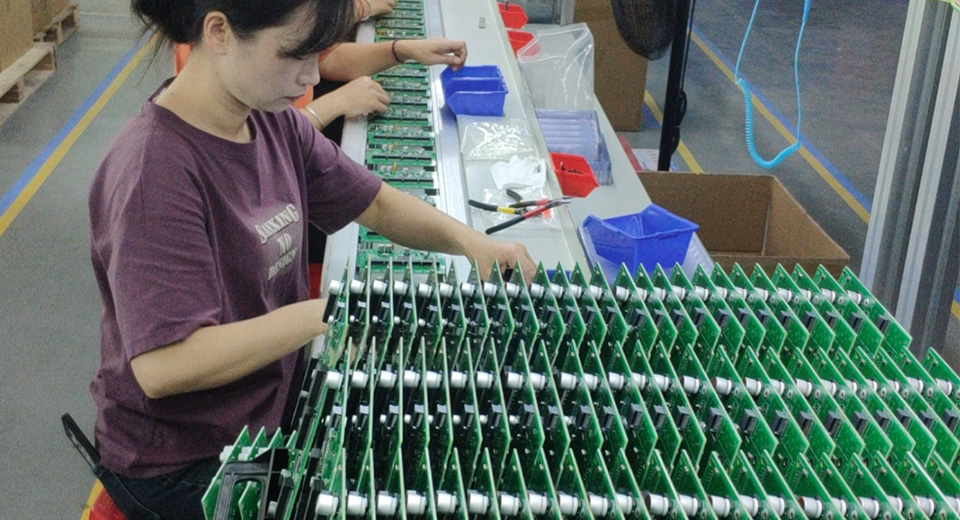
The first dimension is R&D and production capabilities—this is the most fundamental. PoE switches may seem simple, but they actually demand extremely high standards in circuit design, power supply stability, and heat dissipation, especially for industrial switches which must withstand high and low temperatures and strong interference environments. I generally prioritize checking if a factory has an independent R&D laboratory capable of conducting core tests such as high and low temperature testing, lightning strike testing, and power consumption testing. Manufacturers like Newbridge, deeply rooted in optical transmission and network communication equipment, have accumulated considerable experience in the PoE switch ODM/OEM field. Their R&D teams can accurately match the customized needs of different industries, and their production bases can achieve full-process control from component procurement to mass production. Factories with such technological expertise can significantly reduce product failure rates. Furthermore, production scale is also crucial; it should be able to meet your capacity needs for at least 1-2 years to avoid frequent factory changes leading to poor product consistency.
The second dimension is that a quality control system must be implemented throughout the entire process. The core pain points of PoE switches are unstable power supply, port damage, and short lifespan, all of which are related to inadequate quality control. I once worked on a project where we outsourced to a small factory. They only performed a simple power-on test before shipping, and as a result, 30% of the products had insufficient power supply after mass delivery. This not only led to high rework costs but also damaged the client's reputation. Professional contract manufacturers establish end-to-end quality control, from component procurement (e.g., selecting branded chips and capacitors), to SMT surface mount testing and semi-finished product testing during production, and finally to aging and salt spray testing before shipment—every step is documented and traceable. Before collaborating, it's essential to visit the factory in person to see if the quality control process is implemented, whether there are corresponding testing equipment and record forms, and even to request third-party testing reports.
The third dimension is industry adaptability. Different scenarios have vastly different requirements for PoE switches. For example, security monitoring scenarios require stable power supply 24/7, wireless network coverage scenarios have high requirements for port speed and compatibility, and industrial scenarios prioritize interference resistance and weather resistance. If a contract manufacturer only makes general-purpose models, it will be difficult to meet these specific needs. When I was helping security clients find OEM manufacturers, I eliminated many companies that only produced civilian models. Ultimately, I chose a team that could customize surge protection and lightning protection features, as security equipment is mostly used outdoors, and these features directly determine the product's lifespan. OEM companies like Newbridge, which cover multiple scenarios including security, commercial, and industrial applications, can quickly understand the pain points of different industries and provide targeted design and production solutions, making them more worry-free than general-purpose factories.
Fourthly, after-sales service and response speed cannot be ignored. OEM cooperation is not a one-off transaction. After mass production, products face issues such as firmware upgrades, troubleshooting, and batch repairs. The OEM manufacturer's after-sales capabilities directly affect your market reputation. I've seen some factories that abandon their customers after selling the products; when problems arise, the contact person takes forever to respond, leading to constant customer complaints. Professional OEM manufacturers have dedicated after-sales teams that promise clear response times, such as providing solutions within 24 hours, and on-site handling for batch issues. In addition, R&D response speed is also crucial. Market demands change rapidly; for example, if there's a sudden need to add PoE+ power supply functionality, the OEM's ability to quickly adjust the design and produce prototypes directly determines whether you can seize market opportunities.
Finally, here are two tips to avoid pitfalls: First, don't blindly pursue the lowest price. The cost of PoE switch components is relatively transparent. Factories offering prices far below the market average are likely cutting corners on quality control or components. Second, always sign a detailed contract before cooperation, clearly defining core terms such as production capacity, delivery cycle, quality standards, after-sales responsibility, and intellectual property ownership to minimize risks.
PoE switch ODM/OEM cooperation is essentially about finding a reliable partner, not just a manufacturer. Choosing the right OEM not only saves you a lot of trouble in R&D and production but also allows you to leverage their technical strength to enhance product competitiveness. If you encounter specific problems during the cooperation process, such as not knowing how to assess a factory's R&D capabilities or how to refine contract terms, feel free to message me privately. I will share a compiled evaluation checklist with you.