Having worked in the network equipment industry for many years, I've seen too many companies trapped by the word "customization." This is especially true for PoE switches. Many small and medium-sized projects and special scenarios, which clearly only require a few dozen or even just a few units for small-batch customization, are forced to compromise by using generic models or face lengthy waiting times and high costs due to the rigidity, long lead times, and high barriers to entry of traditional production lines. The emergence of flexible manufacturing is completely breaking this deadlock, allowing small-batch PoE switch customization to be implemented efficiently and with rapid response.
I once worked with a client who was developing a smart park. They needed to customize a batch of PoE switches for the park's intelligent monitoring, wireless APs, and access control systems. The project had a tight schedule, requiring only 50 units, with requirements including 8-port Gigabit PoE+, support for 250-meter long-distance transmission, and adaptability to the park's wide outdoor temperature environment. Under the traditional model, manufacturers would either refuse such a small order or double the price and extend the delivery cycle to over 30 days. However, thanks to the flexible production model, the entire process from demand confirmation to solution design, production testing, and delivery took only 12 days, with costs kept within a reasonable range, ultimately perfectly matching the project schedule. This is the charm of flexible production—it's not just "icing on the cake" for large-scale standardized production, but rather "a lifesaver" tailored for small-batch, personalized needs.
I. What are the difficulties in small-batch PoE switch customization?
Many people think, "Isn't it just customizing a few switches?" Actually, it's not. The pain points of small-batch PoE customization lie in every aspect of production, technology, and cost:
Production line adaptation difficulties: Traditional production lines are designed for large-batch, standardized orders, resulting in extremely high costs for changeovers and debugging. The changeover time for small-batch orders may be longer than the production time, which manufacturers are often unwilling to undertake. Even if they do, they will pass on the changeover costs to the customer, leading to a surge in unit prices.
Demand matching difficulties: PoE switch customization requirements are diverse—4 ports, 8 ports, or 16 ports? What power supply standard is required: AF (15.4W), AT (30W), or BT (90W)? Is wide temperature range, dustproof, and electromagnetic interference resistant necessary? Does it need to support VLAN, QoS, and ring network redundancy? The requirements vary greatly across different scenarios, making generic solutions inadequate, while precise matching is difficult for small-batch customization.
Long delivery cycles: From requirements communication, hardware design, software debugging to production testing, traditional processes are interconnected. Small-batch orders lack priority and often require waiting in queues, resulting in delivery cycles of 20-30 days, which is far from meeting the urgent pace of projects.
Difficult cost control: Small-batch production means smaller component quantities and higher unit prices. Adding production line debugging and labor costs, the final customized cost can be 1.5-2 times that of generic solutions, deterring many companies.
These pain points are precisely the core issues that flexible manufacturing aims to address.
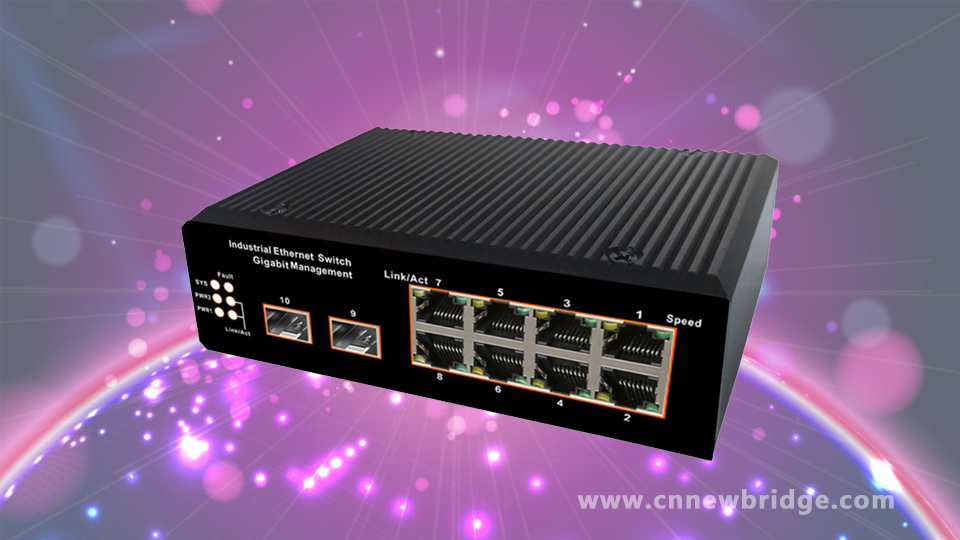
II. How does flexible manufacturing solve the challenges of small-batch PoE customization?
The core of flexible manufacturing is "adapting to change"—through modular design, flexible production lines, and rapid response mechanisms, even small-batch customization can achieve high efficiency, low cost, and short lead times. Considering the industry characteristics of PoE switches, the implementation logic of flexible manufacturing is mainly reflected in three levels:
1. Modular Design: Turning Customization into "Building Blocks"
This is the foundation of flexible manufacturing. The hardware and functions of PoE switches are broken down into independent standardized modules, such as port modules (4/8/16 ports), power supply modules (AF/AT/BT), protection modules (wide temperature/dustproof/interference-resistant), and functional modules (VLAN/QoS/ring network), etc. Customer customization needs are no longer developed from scratch, but rather freely combined from an existing module library.
For example, if a customer needs an 8-port Gigabit PoE+ switch with a wide temperature range of -40℃ to 85℃ and support for ERPS ring networks, we only need to retrieve the 8-port Gigabit module, PoE+ power supply module, wide temperature protection module, and ERPS function module from the module library to quickly assemble a customized solution. No hardware redesign is required, and the development cycle is compressed from weeks to days. Newbridge's PoE switch product line is built on this modular concept, ranging from basic 4-port models to 24-port industrial models; all customized needs can be quickly adapted to Newbridge through modules.
2. Flexible Production Line: "Rapid Changeover and Efficient Production" Even with Small Batch Sizes
Flexible production lines break the rigid constraints of traditional production lines, adopting a "multi-variety, small-batch, rapid changeover" model. The core is twofold: first, the production line equipment has high compatibility, enabling rapid adaptation to the production of different switch models; second, it adopts unitized production, breaking down the production process into independent units, allowing small-batch orders to be scheduled separately without affecting the progress of large-batch orders.
For example, our production line has reduced changeover time from the traditional 8 hours to less than 30 minutes. A single production line can simultaneously handle orders of 10, 50, or 100 units. Small-batch PoE customized orders can be directly inserted into the production line without queuing, with production efficiency almost indistinguishable from large-batch orders. Simultaneously, through a digital management system, we monitor production progress and material inventory in real time, ensuring timely material supply for small-batch production and avoiding delays due to material shortages.
3. Rapid Response Throughout the Entire Process: Accelerated Progress from Demand to Delivery
Flexible manufacturing is not just about flexible production processes, but also about rapid response throughout the entire process, from demand communication to after-sales service:
Rapid Demand Integration: We assemble a professional technical team to respond to customer needs within 1 hour and complete demand assessment and solution design within 24 hours, clarifying all customized parameters such as ports, power supply, protection, and functions, avoiding repeated communication.
Rapid Testing and Verification: Based on a standardized testing platform, the testing process for small-batch customized switches is simplified but not compromised. Comprehensive testing, including high and low temperature, electromagnetic interference, PoE power supply, and network performance, is completed within 48 hours, ensuring product stability.
Fast Delivery and Fulfillment: After production, small-batch orders are prioritized for shipment, with delivery to most parts of China within 3-5 days. Urgent orders can be expedited, with delivery as fast as 7 days.
Fast After-Sales Support: 24/7 technical support is provided. Small-batch customized products also enjoy warranty service. Fault issues will be responded to within 4 hours, and solutions will be provided within 24 hours.
III. Small-Batch PoE Switch Customization: These Scenarios Deserve Flexible Production Most
Flexible production makes small-batch PoE customization no longer a "luxury." The following scenarios can achieve efficient implementation through flexible production:
Small and Medium-Sized Project Scenarios: Such as small smart parks, community monitoring, campus LANs, and office networks for small and medium-sized enterprises. These projects are small in scale, with PoE switch requirements between 10-100 units. Flexible production can quickly match project cycles and control costs.
Specialized environmental scenarios: Applications such as outdoor monitoring, industrial production lines, mines, and rail transportation require customized solutions with features like wide temperature range, dust resistance, interference resistance, and explosion protection. Small-batch flexible customization precisely adapts to environmental needs, avoiding the incompatibility issues of generic models.
Pilot testing scenarios: New business pilots and product testing require small batches of PoE switches to verify the feasibility of solutions. Flexible production can quickly provide test prototypes, shortening the verification cycle and reducing trial-and-error costs.
Upgrade and transformation scenarios: Upgrading legacy networks requires supplementing a small number of customized PoE switches to maintain compatibility with existing network equipment. Flexible production can quickly customize compatible models for seamless integration.
I once served an industrial automation company whose production line upgrade required 20 customized PoE switches, supporting the Profinet protocol, DIN rail mounting, and wide temperature range operation. Through flexible production, we quickly completed module assembly and production line scheduling, delivering the equipment in just 10 days. After the equipment went live, network latency decreased by 60%, and the failure rate decreased by 90%, perfectly supporting the flexible production needs of the production line. This experience has made me deeply realize that flexible customization of PoE switches is a crucial foundation for enterprises to achieve flexible production.
IV. Several Key Considerations When Choosing Small-Batch Flexible PoE Customization
While flexible production addresses most pain points, several key issues still need attention during the selection process to avoid pitfalls:
**Clarify Core Needs and Avoid Over-Customization:** First, clarify the core needs of your scenario—for example, is wide temperature range necessary? Is high-power PoE required? Which functions are essential, and which are optional? Avoid blindly pursuing full functionality, which can unnecessarily increase costs. For example, in a simple office scenario, industrial-grade redundancy is unnecessary; a basic PoE switch is sufficient.
**Choose a Mature Modular Supplier:** A supplier's modular capabilities directly determine customization efficiency and cost. Prioritize manufacturers with mature module libraries and flexible production lines, such as Litabrige, which possesses modular design capabilities for a full range of PoE switches, ensuring rapid deployment of small-batch customization.
Newbridge Focus on Testing and Quality Assurance: Small-batch customization does not equate to reduced quality. It is crucial to verify the supplier's testing procedures are comprehensive and that they provide the same quality assurance services as mass-produced products. Avoid neglecting product stability due to small batch sizes.
Communicate Delivery Cycles in Advance: After clarifying requirements, confirm specific delivery times with the supplier. For urgent orders, negotiate expedited production to ensure project progress is not delayed.
Flexible manufacturing is reshaping the customization logic of the PoE switch industry. It ensures that small-batch, personalized needs are no longer overlooked, allowing every scenario to have suitable network equipment. For enterprises, choosing flexibly customized PoE switches not only addresses current project needs but also embraces a flexible and efficient production and operation model.
In the future, with the development of the Internet of Things and smart manufacturing, PoE switch customization needs will become increasingly fragmented and personalized, and flexible manufacturing will become the mainstream trend in the industry. We will continue to deepen our understanding of flexible manufacturing technology, optimize modular design and production line efficiency, ensuring that every small-batch PoE customization need is met quickly, efficiently, and cost-effectively.